
The New Face of New York: Zohran Mamdani and a New Generation of Leadership
By Ellen Hughes
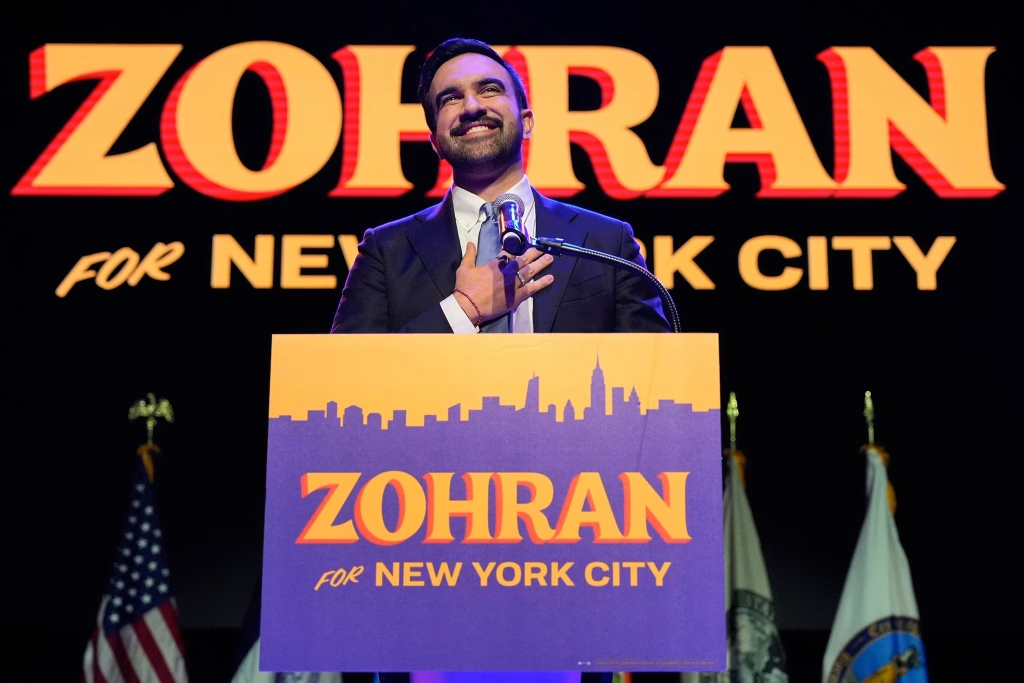
New York City has elected a democratic socialist mayor for the first time in its modern history, and the result is already reshaping national politics.
In a stunning upset this November, 34-year-old Zohran Mamdani secured more than half of New Yorkers’ votes. He defeated both established political heavyweight Andrew Cuomo and republican firebrand Curtis Sliwa. The win makes Mamdani the first Muslim mayor in the city’s history and the youngest elected to the role in over a century. [1]
Mamdani’s victory represents more than a change in leadership; it marks a generational and ideological shift in urban politics. Before entering politics, Mamdani’s work was first based in the neighbourhoods he now seeks to serve as mayor. As a housing counsellor, he helped low-income, immigrant homeowners fight eviction and navigate New York’s complex legal and bureaucratic systems. He often credits these experiences with shaping his commitment to economic justice and social equity.
Mamdani’s rise stood in stark contrast to that of his opponents. Cuomo brought decades of statewide political experience as governor of New York. At the same time, Sliwa leveraged name recognition from his media career and his non-profit crime prevention organisation, The Guardian Angels. Mamdani, by comparison, was an outsider, but one who was deeply connected to the everyday realities of New Yorkers. His campaign also reflected this ethos visually. With bold orange and blue branding designed by his wife and artist, Rama Duwaji, Mamdani’s movement cultivated an identity that appealed to and resonated with young voters [2].
Viral TikTok videos and Instagram collaborations amplified Mamdani’s message far beyond traditional campaign methods. This energised young voters, many previously disconnected from city politics, as memes and influencer content helped his campaign reach online spaces beyond New York and across the world. A tool that is often overlooked by conventional politics.
Policy-wise, Mamdani emphasised issues that directly affect the lives of everyday New Yorkers: “I will wake each morning with a singular purpose. To make this city better for you than it was the day before” [3]. He proposed rent freezes, universal childcare, stronger tenant protections, and free public bus service. Supporters expect these policies to increase housing affordability, support working families, and improve mobility for low-income residents [4].
Despite his victory, critics have raised concerns about the feasibility of his platform. Landlords warn that stricter rent regulations could destabilise the housing market by reducing profits and discouraging investment, while transportation agencies have flagged the high cost of their proposed free bus service, cautioning it could require increased funding or service adjustments.
At the state level, Mamdani will need cooperation from NYC’s capital, Albany, where Governor Kathy Hochul has expressed scepticism. Many of his proposed initiatives require state approval, making negotiation and legislative skills crucial. Even within the Democratic Party, centrists worry that his progressive agenda could alienate investors and complicate the city’s financial recovery [5].
Yet to Mamdani’s supporters, these challenges highlight the significance of his election. His victory represents a growing demand for leaders willing to confront long-established power structures and prioritise the needs of ordinary citizens over corporate or political interests.
Mamdani’s election has also drawn both attention and criticism on the national stage.
President Donald Trump labelled him a “lunatic communist” [6], warning that his policies could devastate New York. Mamdani later addressed Trump directly in his victory speech: “Donald Trump, since I know you’re watching, I have four words for you: turn the volume up.” He vowed to hold powerful landlords like Trump accountable, close tax loopholes for billionaires, strengthen workers’ rights, and safeguard New York’s identity as a city built by immigrants [3].
In democratic-leaning areas such as the Bronx and Queens, festivities erupted following the election. Residents gathered in streets, bars, parks, and community centres to celebrate. For many, the victory was more about reclaiming civic power than just electing a mayor. Political analysts are already speculating on what Mamdani’s tenure could mean for New York and the nation.
Mamdani’s win also speaks to political changes happening far beyond New York. Here in Northern Ireland, many young people are engaging with politics through social media and online campaigns, especially on issues like housing, cost of living, and mental health. Traditional parties are no longer the only way to be heard. The energy that helped bring Mamdani to office shows how digital platforms can give new voices influence – a trend that may define the future of politics both in New York and at home.
References:
[1] BBC News, “Trump Says It’s ‘Communism or Common Sense’ after Mamdani Wins Election,” ed. Brandon Livesay and Oliver O’Connell, BBC News, November 5, 2025, https://www.bbc.co.uk/news/live/cg51m5emnmvt?page=8.
[2] Cartner-Morley, Jess. “Gen Z’s ‘First Lady’: How Rama Duwaji, Mamdani’s Wife, Speaks to a New Era of Political Fashion.” the Guardian. The Guardian, November 12, 2025. https://www.theguardian.com/fashion/2025/nov/12/rama-duwaji-zohran-mamdani-style-politics.
[3] “Zohran Mamdani NYC Mayoral Race Victory Speech | Rev,” Rev.com, 2025, https://www.rev.com/transcripts/mamdani-victory-speech.
[4] “A New Era for NYC,” November 12, 2025, https://www.transition2025.com.
[5] McMahon, E. J. “Zohran Mamdani Will Need Allies in Albany.” Manhattan Institute, June 30, 2025. https://manhattan.institute/article/zohran-mamdani-will-need-allies-in-albany.
[6] Anna Betts, “Trump Signals He May Soon Meet with Political Adversary Zohran Mamdani,” the Guardian (The Guardian, November 17, 2025), https://www.theguardian.com/us-news/2025/nov/17/trump-zohran-mamdani-meeting.


